See the job before the truck rolls.
Your customer sends a photo and a voice note. Your technician arrives knowing what is wrong, and finishes the job on the first visit.
Talk to us about a trialFor small residential HVAC companies. You keep your customers, your brand and your data.
How it works
Being built now. What exists today is listed further down.
-
Your link, your logo
Your customer opens a link from your company and sends up to three photos of the unit and a 20-second voice note. The link takes your logo and colours from your own website, so it looks like you from day one.
-
Sorted before anyone drives
The AI identifies the equipment and sorts the job. Fixed safety rules override the model.
Safe to fix yourselfNeeds a technicianDo not touchEmergency -
The technician gets the brief
Unit, what the customer said, what to check first. After the visit, two taps: was the brief right, what was the cause. That is how it learns your company.
What the technician gets · example, illustration
No cooling, upstairs unit
Needs a technician- Unit
- Outdoor condenser, identified from the customer's photo
- Customer said
- "Fan runs, air isn't cold, started yesterday"
- Check first
- Likely causes, ranked, with what to bring
- After visit
- Brief right or wrong? Cause was…
Who it is for
- Small residential HVAC companies, roughly three to fifteen technicians, on Housecall Pro or Jobber.
- HVAC first. Plumbing and electrical use the same link later.
- Not a marketplace. We never sell your customers as leads.
What exists today
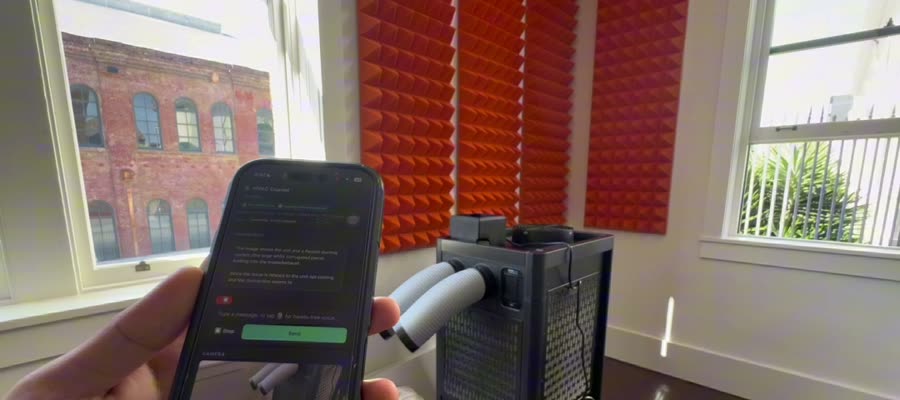
- The first prototype, HVAC Copilot, built by Rayhan Patel at the YC × Cactus × Google DeepMind Voice Agents Hackathon in April 2026, placed in the top 10 of 200+ builders. Watch the pitch.
- It identifies a unit from a phone camera and produces a structured job record. Both videos are below. Code: github.com/Rayhanpatel/Ycombinator-Cactus-Deepmind (MIT).
- Next: first trials in Maryland. If you run a small HVAC company or a weatherization program, we would like to show you.
See it
Two videos from April 2026. What they show is unit recognition and the original pitch. The intake-first version described above is what we are building now.
60-second demo. The prototype recognises the unit from a phone camera and starts the job record. Open on YouTube.
Two-minute pitch on stage at YC. Where this started: the hackathon team's original framing was an assistant for the technician on site. Open on YouTube.
What we want to build
The whole goal, in order. Only step one is being built today.
- The problem. Small service companies lose money in the gap between a customer who cannot describe the problem and a technician who has to drive out to see it.
- Step one, HVAC. A link the company gives its customers. Photo and voice note in, one-page brief out. We measure one number: jobs finished on the first visit.
- Step two, the record. Every job pairs what the customer said and showed with what the technician found. No field-service software keeps that pairing. It makes the next brief better and tells a company what to keep on the truck.
- Step three, more trades. Most small HVAC companies also do plumbing and electrical. Same link, same customers, second trade. Then appliances.
- The technician's side. Today a brief on a phone. Later it talks, hands-free, in a basement with no signal, because in the US there is no junior beside the technician handing over tools and answers. Glasses when a job site is ready for them.
- Parts, through partners. The record tells a company what to stock and tells the distributors who already sell parts what is failing where. We are not the warehouse.
- Every size of company. Small shops first, because they buy fast and nobody serves them. Then the groups that own many of them.
- The long goal. Every service business gets its own expert: one that talks to their customers before the visit and to their technicians during it, under the business's own name. What Shopify did for small shops, without becoming the shop.
ServiceTitan says its product is not built for companies with three or fewer technicians. Most HVAC companies are that size. That is who we are for.
Not building: a marketplace, another scheduling system, a homeowner app. The company keeps its customers, its brand and its data.
Run a small HVAC company in Maryland or DC? We want to try this with you and count the trips it saves.
Talk to us about a trialLinks
- 60-second demoYouTube, April 2026
- Two-minute pitch at YCYouTube, April 2026
- Prototype source codeGitHub, MIT licence
- YC × Cactus × Google DeepMind Voice Agents Hackathonthe event, April 19 to 20, 2026
- Rayhan Patel, builder pageother things built, with what broke and what was learned
- rayhanbp@umd.eduUniversity of Maryland